Why You Can't Stop Scrolling Before Bed (It's Not Laziness — Your Brain Is Trying to Cope)
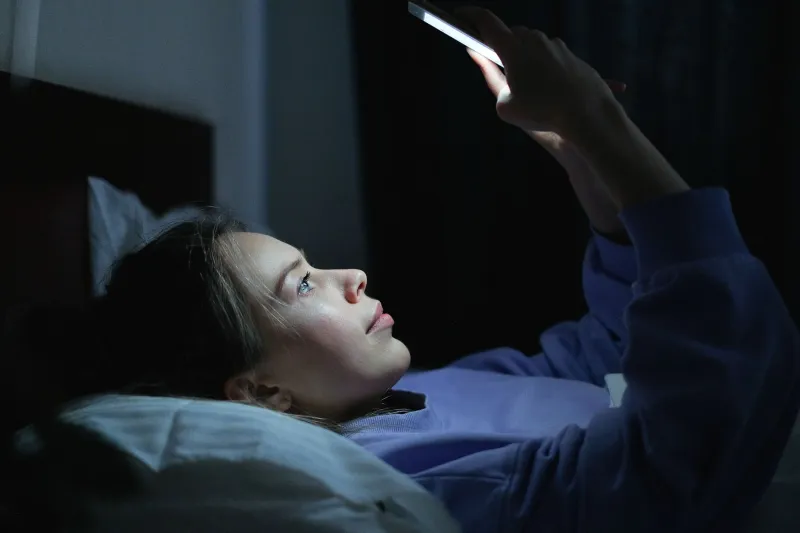
It's 10:47 PM. You told yourself you'd be asleep by 10. Instead, you're on your phone, watching a video about someone's elaborate pasta recipe, having already watched twelve other videos about things you don't particularly care about. You're not even enjoying it. But you can't stop.
Sound familiar? You're in good company — and you're not failing at self-control. You're experiencing one of the most common stress responses in modern American life.
Scrolling Isn't the Problem. It's the Signal.
We've been told endlessly to "put the phone down" — by wellness influencers, sleep doctors, our own guilty consciences. But that advice skips over something important: the reason we pick it up in the first place.
Doom scrolling — that compulsive, passive consumption of an infinite feed — isn't a character flaw. It's a coping mechanism. And like most coping mechanisms, it exists because it's doing something for us, even if what it's doing comes with a cost.
For busy professionals who spend their days making decisions, managing people, hitting deadlines, and absorbing stress, the end of the workday doesn't automatically flip a switch in the brain. The nervous system is still activated. The cortisol is still circulating. The mental chatter hasn't quieted down. And the body is looking for something — anything — that feels like relief.
Scrolling offers a very specific kind of neurological relief: low-effort, low-stakes stimulation that keeps the brain just occupied enough to stop ruminating, without demanding anything in return.
What's Actually Happening in Your Brain
Let's get into the neurochemistry for a second, because it's genuinely fascinating and way more useful than being told to "practice discipline."
When you're under chronic stress, your dopamine system gets dysregulated. Dopamine isn't just the "pleasure chemical" — it's more accurately described as the "anticipation and seeking" chemical. It drives you toward novel stimuli. And an infinite social media feed is essentially a dopamine slot machine: variable rewards, unpredictable content, just enough interesting things to keep the seeking loop going.
At the same time, the passive nature of scrolling activates a mild form of what researchers call "effortless attention" — the same low-demand engagement you get from watching a fire or looking out a window. It's not deeply restorative, but it does temporarily quiet the prefrontal cortex, which has been working overtime all day. That quiet feels like relief.
The problem is the aftermath. The blue light disrupts melatonin production. The emotionally activating content (news, conflict, comparison-triggering posts) keeps the stress response simmering. And the dopamine loop doesn't resolve — it just runs out of battery when you finally fall asleep, leaving you less rested and more depleted the next morning.
So the thing you reached for to feel better ends up making you feel worse. And the cycle continues.
What Your Nervous System Is Actually Asking For
Here's the reframe that changes everything: your nervous system isn't asking for a screen. It's asking for a transition.
After a high-demand day, your body needs a genuine off-ramp — a way to shift from sympathetic nervous system activation (fight-or-flight mode) to parasympathetic activation (rest-and-digest mode). Scrolling mimics this transition without actually completing it. It's like pressing the brake pedal without fully stopping the car.
What the nervous system actually wants tends to fall into a few categories: sensory engagement that isn't screen-based, gentle cognitive stimulation that doesn't demand output, and physical cues that signal safety and rest. Once you know that, the alternative behaviors start to make a lot more sense — because you're not just replacing a habit, you're actually meeting the underlying need.
Science-Backed Alternatives That Actually Work
These aren't arbitrary suggestions. Each one addresses a specific neurological function that scrolling was trying (and failing) to fulfill.
For the "I need to decompress" feeling: Try slow, narrative audio. Podcasts or audiobooks — especially fiction or slow-paced storytelling — engage the brain's language processing centers in a way that's absorbing but not demanding. You're not producing anything. You're just receiving. This satisfies the "effortless attention" need without the blue light or the dopamine loop. Bonus: it's a much gentler transition into sleep.
For the "I need to turn my brain off" feeling: Try progressive muscle relaxation. This sounds clinical, but it's genuinely effective and takes about 10 minutes. You systematically tense and release muscle groups from your feet upward, which activates the parasympathetic nervous system directly. It's physical proof to your body that the emergency is over. Apps like Insight Timer have free guided versions if you don't want to do it from memory.
For the "I need novelty" feeling: Try a low-stakes creative outlet. The dopamine-seeking loop is real, but it doesn't have to be fed by a feed. Sketching, journaling, doing a puzzle, or even flipping through a physical magazine can satisfy the novelty-seeking impulse without the neurological cost. The key word is low-stakes — this isn't the time for ambitious projects.
For the "I need to feel something other than work stress" feeling: Try deliberate sensory comfort. A warm shower, a cup of herbal tea, a few minutes of stretching on the floor — these are all forms of sensory input that activate the vagus nerve and support a genuine shift in nervous system state. They're not glamorous, but they work in a way that a TikTok rabbit hole never quite manages.
The Ritual Reframe
One reason scrolling is so sticky is that it's easy and it's already there. The phone is in your hand. The app is already downloaded. There's no friction.
Building effective alternatives means reducing friction on the replacement behavior while increasing it (slightly) on the scrolling. That might look like charging your phone in another room at night, keeping a book or journal on your nightstand, or setting a single app timer that gives you a soft nudge at 9:30 PM.
You don't need to go cold turkey. You just need a better off-ramp that's equally accessible.
A Gentler Way to Think About This
If you've been beating yourself up about scrolling, here's an invitation to stop. Your brain found a coping strategy for an overwhelming amount of stress, and it worked just well enough to stick around. That's not weakness — that's adaptation.
The shift isn't about willpower. It's about understanding what you actually need at the end of a hard day and giving yourself something that genuinely delivers it. When you meet that need for real — with something that actually calms the nervous system instead of just distracting it — the pull of the phone starts to lose its grip.
And that's when you can finally exhale.