You Finally Have Free Time — So Why Does It Feel Terrible?

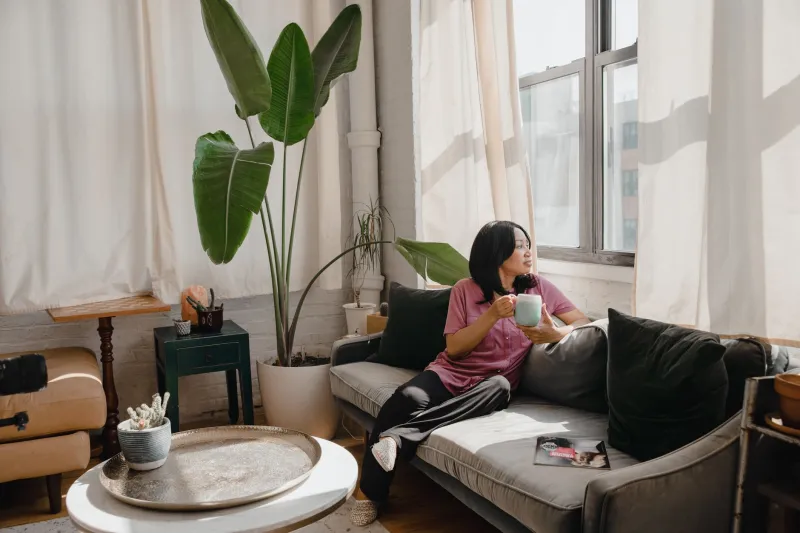
You did everything right. You blocked off a Sunday afternoon. You told yourself you'd actually rest this time. Maybe you even made a little ritual of it — poured a drink, put on something comfortable, queued up a show you've been meaning to watch for three months.
And then, somewhere around minute four of sitting still, a familiar restlessness crept in. Your mind started cataloging everything you should be doing. A vague, low-grade guilt settled over your chest. The relaxation you'd been craving all week suddenly felt... stressful.
If that sounds uncomfortably familiar, you're not broken. You're experiencing what psychologists sometimes call anxious leisure — and it's one of the most quietly exhausting patterns in modern professional life.
The Guilt Loop Nobody Talks About
American work culture has a complicated relationship with rest. Hustle narratives are everywhere — on LinkedIn, in podcast intros, in the casual way people compete over how busy they are. When your entire professional identity is built around output and productivity, downtime starts to feel like a character flaw rather than a biological necessity.
Research from the Journal of Experimental Social Psychology found that people who believe leisure must be earned through hard work actually enjoy rest less, even when they've objectively done enough to deserve it. The bar just keeps moving. You finished the project, but there's another one. You hit the deadline, but there's a meeting to prep for. The permission to relax never quite arrives — because you're the one withholding it.
This creates a feedback loop: you feel guilty resting, so rest doesn't feel restorative, so you feel more depleted, so you work harder to compensate, so you feel even less okay about stopping. Round and round.
Your Nervous System Didn't Get the Memo
Here's where it gets a little biological. Your autonomic nervous system has two primary modes: the sympathetic nervous system (the "go, go, go" state) and the parasympathetic nervous system (the "rest and digest" state). When you're running on deadline energy for weeks — or years — your nervous system essentially gets stuck in sympathetic overdrive.
So when you finally sit down to watch TV or take a bath or do literally nothing, your body doesn't automatically flip a switch. It's still scanning for threats, still primed for action. That jittery, can't-quite-settle feeling during downtime? That's not laziness. That's a nervous system that has genuinely forgotten how to idle.
Dr. Saundra Dalton-Smith, author of Sacred Rest, describes this as a "rest deficit" that goes deeper than sleep. We're not just physically tired — we're emotionally, mentally, and socially depleted in ways that a weekend alone can't fix if we don't know how to actually receive rest.
The Productivity Trap Dressed Up as Self-Care
There's another layer worth naming: the way we've turned relaxation into a performance.
We optimize our meditation apps. We research the "best" way to take a walk. We read articles about how to relax more efficiently. (The irony of this article is not lost on us.) The hustle brain is sneaky — it will follow you into your bubble bath if you let it, turning every restorative moment into a project to be executed correctly.
This is sometimes called instrumentalized leisure — rest that's only acceptable if it's doing something. If the yoga class is burning calories. If the journaling is increasing productivity. If the vacation is building memories for the Instagram grid. The moment rest stops serving a measurable purpose, the guilt kicks back in.
Real restoration, it turns out, requires something a lot less optimized.
How to Actually Teach Your Brain to Unwind
The good news: anxious leisure isn't permanent. Your nervous system is trainable. Here's where to start.
Start with shorter windows, not longer ones. If a full free afternoon sends your brain into panic mode, begin with 20-minute rest blocks. Set a timer. Give yourself explicit permission for that specific window. Smaller doses of intentional rest are easier for the nervous system to process than open-ended stretches of "you should be relaxing right now."
Name the guilt out loud. It sounds a little silly, but research on emotional labeling (sometimes called "affect labeling") shows that naming what you're feeling — even just thinking "I notice I feel guilty for sitting here" — reduces the emotional intensity of that feeling. You're not suppressing the guilt; you're just refusing to let it run the show silently.
Choose low-stakes, low-stimulation activities first. Scrolling through social media is not rest — it's stimulation dressed in leisure clothing. True downtime tends to involve slower inputs: a walk without headphones, cooking something simple, sitting outside. These activities ease the nervous system into a lower gear rather than keeping it revved up with content.
Separate rest from reward. This is the big one. Rest doesn't have to be earned. Your body needs it the same way it needs water — not because you hit a metric, but because you're alive and you've been spending energy. Practice taking small rests even on days that didn't feel "productive enough." You're rewriting the internal rule that says you have to deserve stillness.
Build a transition ritual. Your nervous system responds to cues. If you always end work with a specific action — closing the laptop lid, changing clothes, making a cup of tea — you start training your brain to recognize that the "on" switch is being turned off. Over time, these small rituals become genuine signals to your body that it's safe to slow down.
Rest Is a Skill, Not a Reward
Here's the reframe that tends to shift things for a lot of people: rest is not the absence of work. It's an active, trainable skill — one that busy professionals often neglect because they've spent years practicing the opposite.
You got good at pushing through. You got good at staying on top of things. You can also get good at genuinely letting go, but it takes the same thing everything else takes: a little patience, a little repetition, and the willingness to feel a bit awkward at first.
The goal isn't to become someone who effortlessly meditates on a mountaintop. The goal is to build a life where Sunday afternoon feels like a gift instead of a threat.
You've earned the rest. Now comes the slightly harder part — learning to actually take it.